
Outdoor Classroom Lesson Plans: Bringing Learning to Life at Kent College West Cairo
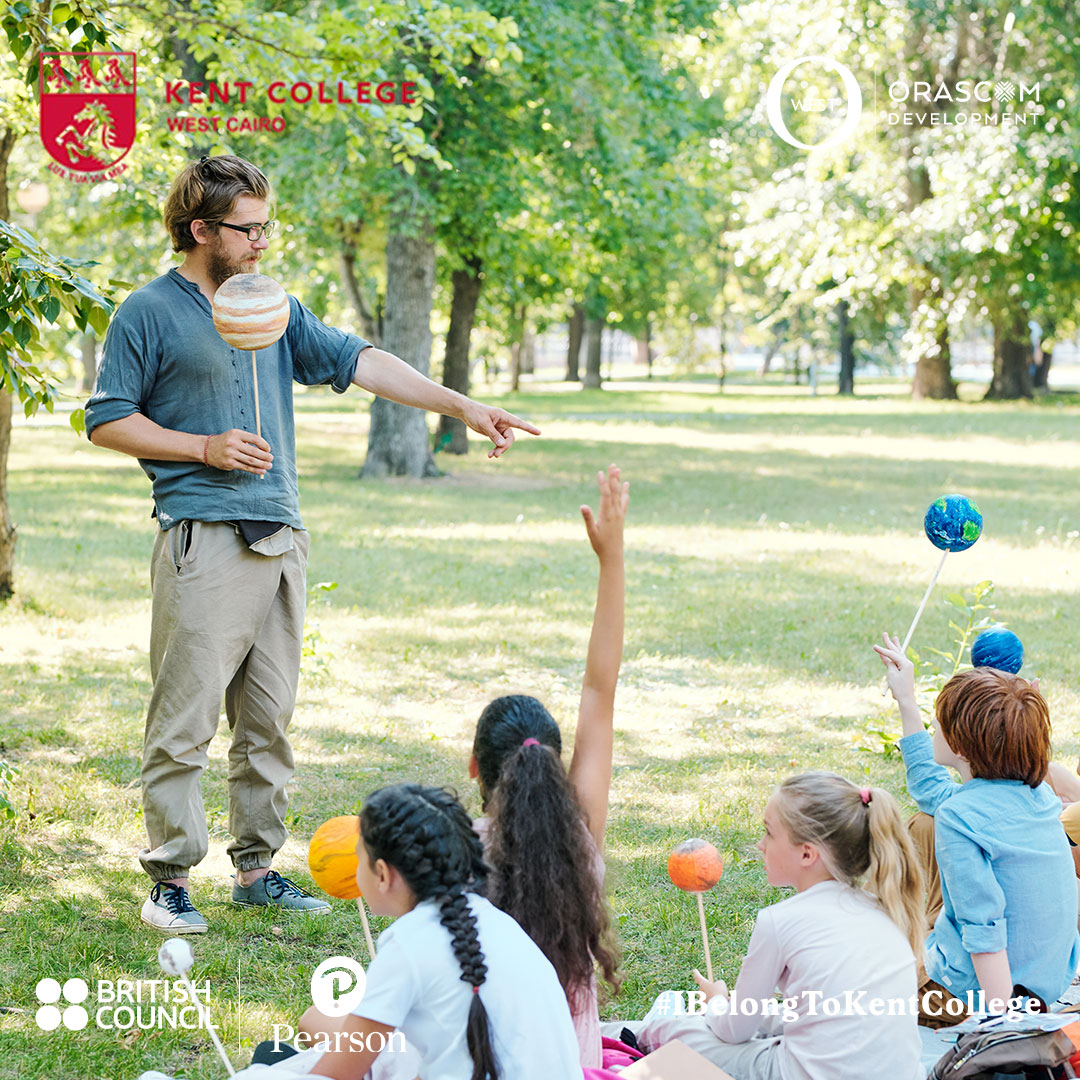
Schools are realising more and more how important it is to go beyond the four walls of the classroom in the fast-paced educational environment of today. Outdoor learning is an essential component of Kent College West Cairo’s concept, not only something new. Teachers who design lesson plans for outdoor classrooms provide students the chance to interact with nature, work together, try new things, and apply what they’ve learnt in practical settings.
The Kent College West Cairo campus, which is situated in the O West Compound in 6th of October City, was created with spacious indoor and outdoor study spaces in mind.
These facilities make it possible to create carefully planned lesson plans for outdoor classrooms that complement the British curriculum, promote students’ overall growth, and develop a love of learning that goes beyond textbooks.
Why Outdoor Learning Matters
Students may occasionally become inactive information consumers when educational life is limited to indoor environments. On the other hand, well-designed lesson plans for outdoor classrooms promote active engagement: students move, investigate, raise questions, and consider what they have learnt. The school’s comprehensive approach is reflected in Kent College West Cairo’s philosophy, which underlines that education is closely linked to experience, investigation, and participation.
Outdoor environments offer special benefits, such as the ability to use all of the senses, the freedom to explore widely, and the chance for creativity and teamwork. To put it briefly, they improve and supplement indoor curricula by providing dynamic venues where well-known ideas can be addressed in new and significant ways.
Designing Outdoor Classroom Lesson Plans at Kent College West Cairo
The method of developing lesson plans for outdoor classrooms at Kent College West Cairo is intentional and in line with the British curriculum. The process of lesson planning is guided by the following elements:
- Clearly defined learning goals
Every outdoor lesson is based on certain curricular objectives, whether they be in Languages, Arts, Science, Geography, or Physical Education. To make outside time meaningful rather than simply enjoyable, the teachers make sure that the lesson plans for the outdoor classroom relate back to these goals.
- A Setting of Purpose
The campus has open spaces, collaborative outdoor zones, and landscaped places that are purposefully incorporated into education. These areas facilitate the execution of outdoor classroom lesson plans that incorporate outdoor resources, natural elements, and equipment into the teaching toolset.
- Student Inquiry and Choice
Student agency is essential, according to Kent College West Cairo. Students are frequently encouraged to take the lead in creating lesson plans for outdoor classrooms by choosing assignments, researching topics, and evaluating their work. This is consistent with the school’s overarching goal of fostering creativity and independent thought.
- Reflection and Integration
There is more to the outdoor lessons than meets the eye. Students discuss results, share experiences, and connect outdoor activities to fundamental ideas during reflection sessions that take place either within the classroom or outside in the shade. A key component of outdoor classroom lesson plans is the do-explore-reflect cycle.
Example Outdoor Classroom Lesson Plans
Here are some practical examples of how Kent College West Cairo uses outdoor classroom lesson plans for various topic areas and year groups:
Environmental Studies & Science
“Nature’s Patterns”: students go outside to a garden area, gather leaves, and study textures, forms, and patterns. They then document their discoveries, connect them to categorisation work, and create original “leaf pattern” artwork. This lesson plan adds a tangible component to the scientific curriculum and makes use of the outdoor environment.
“Floating and Sinking Investigation”: students test things for stability at an outdoor water feature or in a safe water setting, record the results, and speculate as to why some objects float or sink. After that, the data is examined in class again; this is a typical example of a physical science lesson plan for an outdoor classroom.
Physical Education & Movement
“Maths Relay Outdoors”: students solve mathematical questions at stations arranged throughout the outside area, connecting exercise to numeracy. As they run or walk between stations, they reinforce ideas like measurement, angles, and number bonds, all of which are components of a well-organised outdoor classroom lesson plan.
“Team Orienteering Challenge”: students follow a course set up on campus while working in teams, making decisions, and cooperating while using their map-reading abilities outside. This connects movement, cooperation, and geography.
Literacy & Language
“Story Walk”: teachers set up pictures or narrative ideas in different outdoor settings. As they go between the prompts, students write brief descriptions at each stop, discuss what will happen next, and then put them together to form a narrative. An excellent illustration of an innovative outdoor classroom lesson plan that makes use of movement and space as stimuli.
“Outdoor Debate”: students debate current events or environmental issues in small groups while in an outdoor circle. The outdoor environment stimulates conversation and gives language instruction a dynamic feel.
Design & Creative Arts
“Nature’s Palette”: students collect natural elements, such as twigs, leaves, and stones, and use them to create collages or sculptures outside. They connect to topics in art and design by taking pictures of their works and then analysing them in class; this is another example of a lesson plan for an outdoor classroom where the environment serves as a co-teacher.
“Sound Scavenger Hunt”: students use clipboards to record various noises they encounter outside, such as birdsong, wind through trees, and footsteps on surfaces, and then utilise those sounds as inspiration for a piece of music or poetry in the studio.
Cross-Curricular Integration
“Garden Maths & Literacy” is a combined lesson in which students measure plant development (maths), write a brief journal about how plants change (literacy), and talk about how sunshine or weather impacts growth (science). This lesson plan for an integrated outdoor classroom demonstrates how outdoor areas can enhance learning across subject boundaries.
Benefits for Students at Kent College West Cairo
Students at Kent College West Cairo gain from outdoor classroom lesson plans in several ways:
- Enhanced Engagement: students’ attention and excitement are frequently revived in outside environments, which makes learning more memorable.
- Deeper Understanding: Students reinforce their knowledge in ways that are not possible with only indoor instruction when they physically engage with concepts.
- Better Well-Being: the campus’s large, modern outdoor spaces promote safe exploration and emotional well-being.
- Skills for Life: Kent College West Cairo’s holistic development approach promotes collaboration, decision-making, independence, and resilience, all of which are fostered via outdoor courses.
- Link to the Real World: through outdoor classroom lesson plans, students observe how their classroom concepts, whether in geometry, science, or literacy, play out in their environment, connecting theory and practice.
Practical Tips for Implementing Outdoor Classroom Lesson Plans
Here are some helpful recommendations for educators at Kent College West Cairo, as well as for any school wishing to improve outdoor learning:
- Make a logistics plan: verify the outside furniture, seats, shade, weather, and portability of the materials.
- Clear Learning Goals: every outdoor session should have a specific goal connected to the curriculum, even though the environment is informal.
- Utilise the Environment: the layout of the school’s campus is advantageous. Look for opportunities to employ open areas, grass, slopes, and sensory gardening. For this, Kent College West Cairo is well-prepared.
- Encourage student autonomy: to increase ownership and involvement, let students select tasks or take the lead in certain areas of the activity.
- Encourage Reflection: take some time to think after the outside work. Find out what impressed them, what went well, and how it relates to what they learnt in class.
- Assure Safety and Structure: rules, procedures, and frameworks are still necessary for outdoor instruction, particularly when equipment or movement are involved.
- Cross-Link Topics: as demonstrated by Kent College’s integrated approach, use outdoor learning as a link between science, maths, literacy, physical education, and the arts.
- Evaluate and Modify: adjust future outdoor classroom lesson plans based on observations, student input, and results.
Embedding Outdoor Learning in School Culture
Outdoor learning is an integral part of school life at Kent College West Cairo. This is supported by the curriculum, staffing, parent-school collaborations, and campus design.
Kent College West Cairo’s dedication to dynamic learning spaces, both indoors and outdoors, is evident for parents looking for a British curricular experience in an innovative and inclusive international school in Cairo. The school emphasises the idea that learning occurs everywhere by making outdoor classroom lesson plans regular rather than for a special occasion.
Conclusion
Kent College West Cairo distinguishes itself in an academic environment when many schools still primarily focus on books and screens by acknowledging that the outside world may be one of the best classrooms. Children not only learn through well-crafted outdoor classroom lesson plans, but they also explore, create, ask questions, and develop.
These programmes foster the qualities of curiosity, independence, and teamwork that characterise lifelong learners in addition to supporting curriculum objectives and academic achievement. Outdoor learning is made meaningful, interesting, and purposeful by Kent College West Cairo’s innovative teaching philosophy, British curricula, and contemporary campus.
The school’s outdoor learning programme is an appealing aspect for families who value an education that goes beyond the classroom, welcomes experience, and develops self-assured thinkers. After all, the opportunities become endless when education goes beyond walls and enters the classroom of nature.
Leave a Reply