EYFS Nursery and Early Years in Cairo: What Parents Should Look For Before FS1 and FS2
The first school years set the tone
Choosing an Early Years setting can feel emotional because the child is still very young. Parents are not only comparing classrooms and fees. They are asking whether their child will feel safe, understood and excited to come to school. For families searching for an EYFS nursery in Cairo or a British Early Years school in 6th of October, the best choice is one that treats early learning as serious, joyful and age appropriate.
Early Years should never feel like a miniature version of secondary school. Young children learn through play, movement, conversation, stories, relationships and exploration. The right school will help them develop early literacy and maths, but also confidence, independence, self regulation, curiosity and social skills.
What EYFS means in practice
EYFS stands for Early Years Foundation Stage, the framework used in England for young children. In an international school, EYFS usually informs the FS1 and FS2 experience. It is built around the idea that children develop across connected areas: communication and language, physical development, personal, social and emotional development, literacy, mathematics, understanding the world and expressive arts.
For parents, this means a strong Early Years classroom may look busy and playful, but it should not be random. Teachers should be able to explain why activities are set up, which skills they support and how adults observe children’s progress. Sand, water, role play, construction, mark making, phonics, counting, music and outdoor play can all be purposeful when planned well.
Look for language-rich classrooms
Language development is one of the most important reasons to choose a high-quality Early Years setting. Children need adults who speak with them, not only to them. During a visit, listen for teachers modelling vocabulary, asking open questions, encouraging children to explain ideas and helping them resolve small conflicts with words.
This is especially important in Cairo’s international schools, where children may come from bilingual or multilingual homes. A good British Early Years school will welcome linguistic diversity while building confident English communication. Ask how children who are new to English are supported and how families can reinforce language development at home.
Play should be guided, observed and extended
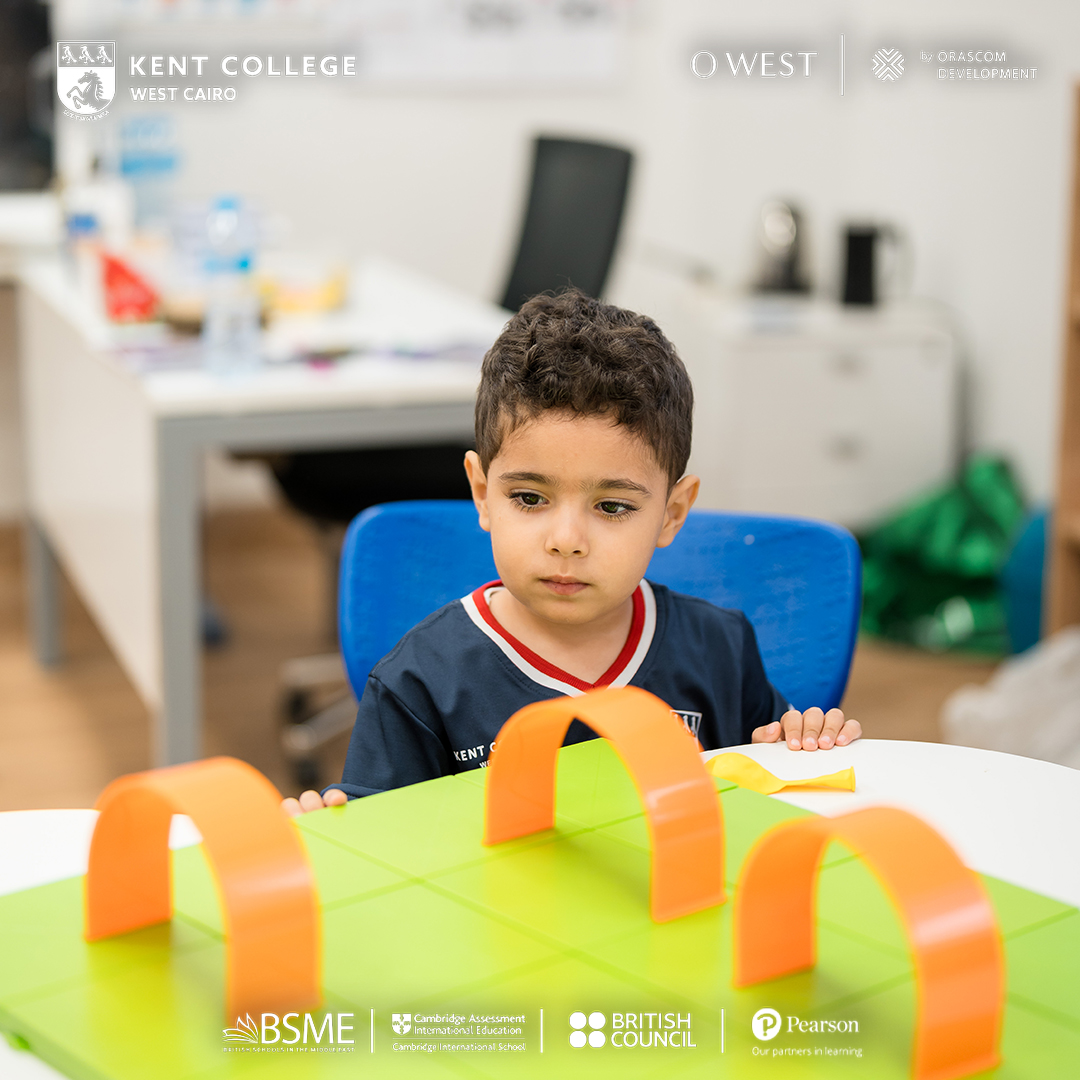
Some parents worry that play-based learning is not academic enough. In strong EYFS practice, play is not a break from learning; it is how much of the learning happens. The teacher’s role is to design rich environments, observe carefully and step in at the right moment to extend thinking. For example, a child building a tower may be exploring balance, shape, number, language, prediction, cooperation and problem solving.
Ask teachers how they record observations and use them for planning. You do not need a technical answer, but you should hear that staff know each child well. They should be able to describe what a child can do now and what they are being encouraged to try next.
Settling in matters as much as academics
A child’s first school experience should build trust. Ask about settling-in routines, separation from parents, communication during the first weeks and how staff respond to tears or anxiety. A warm school will not dismiss these concerns. It will have a calm, predictable approach that helps children feel secure.
Daily routines are also important. Young children benefit from a balance of active play, focused teaching, snack or meal times, rest, outdoor learning and social interaction. The more predictable the routine, the more confident children become. Confidence then supports learning because children are ready to take risks, speak up and try new things.
Outdoor and indoor spaces both count
When visiting an Early Years campus, notice whether spaces invite children to explore safely. Outdoor areas should support climbing, running, imaginative play and discovery. Indoor areas should be organised but not sterile. You should see books, creative materials, construction resources, small-world play, role play, maths resources and spaces for quiet moments.
Ask how often children go outside, how the school handles hot weather and how staff supervise movement between spaces. In Cairo, practical routines around shade, hydration, hygiene and safety are part of good Early Years care.
Parents should be partners, not visitors
Strong Early Years education depends on trust between home and school. Parents should know what their child is learning, how they are settling and how to help at home without turning family life into homework. Ask how the school shares updates: meetings, reports, learning platforms, photos, informal conversations or parent workshops.
A good school will also want to know about your child: interests, languages, routines, allergies, friendships, fears and strengths. The more teachers understand a child’s world, the better they can support learning.
Early Years at Kent College West Cairo
Kent College West Cairo presents its Early Years provision as part of a British international school pathway, with FS1 and FS2 leading into the English National Curriculum. The school emphasises play, investigation, personal and social development, parent partnership and spacious indoor and outdoor environments. For families near O West, Sheikh Zayed and 6th of October, this makes it a relevant option to visit when comparing British Early Years schools in Cairo.
On your tour, ask to see Early Years classrooms during a normal part of the day if possible. Notice the adult-child interactions, the confidence of pupils and the range of activities available. The right setting should feel caring, purposeful and alive with language.
Questions to take on your Early Years tour
Before choosing an EYFS nursery in Cairo, ask: How do you help children settle? How do you teach phonics and early maths? How do you support bilingual children? How much outdoor learning happens each day? How are observations shared with parents? What happens if a child needs extra help?
The answers should give you confidence that your child will be safe, happy and known. In the early years, that emotional foundation is not separate from learning. It is the starting point for everything that follows.
Leave a Reply