
How to Choose a British International School in Cairo: A Parent Checklist for West Cairo Families
Choosing a school is really choosing a daily life
For many families, the search for a British international school in Cairo begins with a simple question: which school will help my child thrive? Rankings, fees and facilities matter, but they rarely tell the full story. A school becomes part of a child’s daily rhythm, friendships, confidence and long-term ambitions. That is why the best search process looks beyond surface level promises and asks how learning, care and community work in practice.
Parents in West Cairo, Sheikh Zayed, 6th of October City and surrounding areas often compare several international schools at once. Some offer a British curriculum, others follow American, IB or blended pathways. The decision is easier when you separate what sounds impressive from what will genuinely support your child’s next stage. Use the checklist below to guide tours, admissions conversations and family discussions.
Start with the curriculum, not the brochure
A strong British curriculum school should be able to explain what children learn, how knowledge builds year by year and how progress is assessed. In a British pathway, younger children usually move from Early Years into Key Stages, then towards recognised examinations and senior options. The value is not only in the qualifications. It is in the clear sequence of learning, subject depth and expectations that prepare pupils for later study.
Ask whether the school follows the English National Curriculum, how it adapts learning for an international community in Egypt and how teachers keep standards consistent. A credible answer should be specific. You should hear about reading, writing, mathematics, science, humanities, languages, arts, technology and personal development, not only about exam results.
Look for continuity from Early Years to sixth form
A school that educates children from Early Years to Year 13 can offer stability, especially for families who want fewer disruptive moves. Continuity does not mean every child follows the same route. It means each stage is planned with the next one in mind. Foundation Stage children need warmth, language development and guided play. Junior pupils need confidence in core skills and curiosity across subjects. Senior students need independence, strong habits and advice about university pathways.
When touring, ask how teachers hand over information as children move between year groups. Find out how the school supports transition into Senior School, when exam choices begin and how older students receive guidance. The answer should show that the school knows each child over time.
Check how teaching, assessment and feedback work
Parents often ask about class size, but the more useful question is: how will my child be known? Effective teaching relies on assessment that informs next steps, not only tests that produce marks. Ask how teachers identify gaps, stretch able learners and report progress to parents. Look for examples of feedback, pupil work, reading records, portfolios, practical projects or assessment schedules.
It is also worth asking how the school develops study habits. In British education, students are expected to become increasingly independent: planning work, revising effectively, asking better questions and reflecting on performance. A school that teaches these habits explicitly can make the move into IGCSE, A Level, IB or other senior pathways smoother.
Ask what support looks like when a child struggles or excels
Every parent hopes their child will settle quickly, but all children need support at different times. A thoughtful international school should be able to explain academic support, pastoral care, language support, inclusion and extension for gifted or highly motivated learners. Avoid schools that speak only in generalities. Ask who coordinates support, how teachers communicate concerns and how parents are involved.
A strong answer will balance high expectations with kindness. It should not treat support as a separate department hidden away from normal school life. Instead, it should show that teachers, tutors, leaders and specialists work together so that pupils feel safe, challenged and understood.
Think about travel, campus and daily routines
In Cairo, location is not a minor detail. The difference between a manageable journey and an exhausting one can shape a child’s mood, sleep and participation in after-school activities. Families searching for an international school in 6th of October City or a British school near Sheikh Zayed should consider travel times at real school-run hours, not only distances on a map.
The campus should also match the educational promise. Look for classrooms that feel purposeful, science and technology spaces that are actually used, safe outdoor areas, libraries, performing arts spaces and sports provision. A large campus is valuable only when it supports daily learning and wellbeing.
Use your school visit strategically
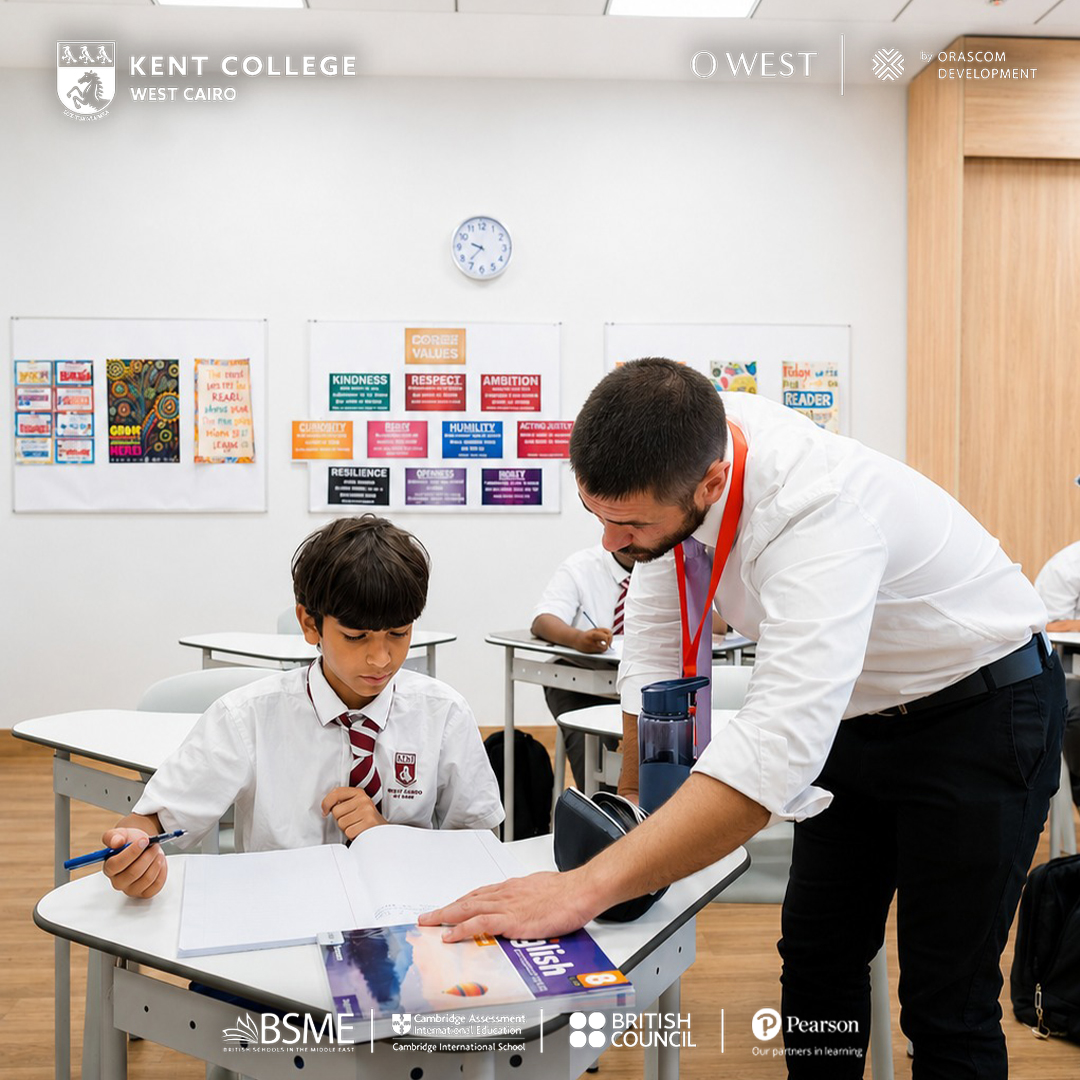
A tour is your chance to observe the school culture. Notice whether pupils greet adults confidently, whether displays show authentic work, whether classrooms feel calm and engaged, and whether staff talk about children as individuals. Prepare questions in advance, such as: How do you help new pupils settle? How do you communicate with parents? How are children grouped for learning? What does homework look like by year group? How do you handle behaviour?
Try to speak to more than one person if possible: admissions, a senior leader, a classroom teacher or a pastoral lead. Consistency between their answers is a good sign. It suggests that the school has a shared approach rather than a polished admissions script.
Why Kent College West Cairo belongs on the shortlist
Kent College West Cairo is positioned for families looking for a British international school in West Cairo with a direct connection to Kent College Canterbury in the UK. Its O West location in 6th of October City is relevant for families across West Cairo, and the school presents itself as offering education from Early Years to Year 13 through the English National Curriculum and IB.
What parents should explore in person is how that promise feels on a normal school day. Ask about curriculum progression, pastoral care, inclusion, facilities, co-curricular life and the relationship with Kent College Canterbury. The right school will make you feel informed rather than pressured, and confident that your child will be both known and stretched.
Final thought for parents
Choosing a school is a serious decision, but it should not feel like a guessing game. If you focus on curriculum, care, teaching quality, campus life and your child’s individual needs, the strongest options become clearer. A British international school in Cairo should offer more than an English-speaking environment. It should offer a coherent education, a values-led community and a pathway that helps children grow into capable, curious and confident young people.
Leave a Reply