
What Your Child’s First 5 School Years Predict About the Next 10
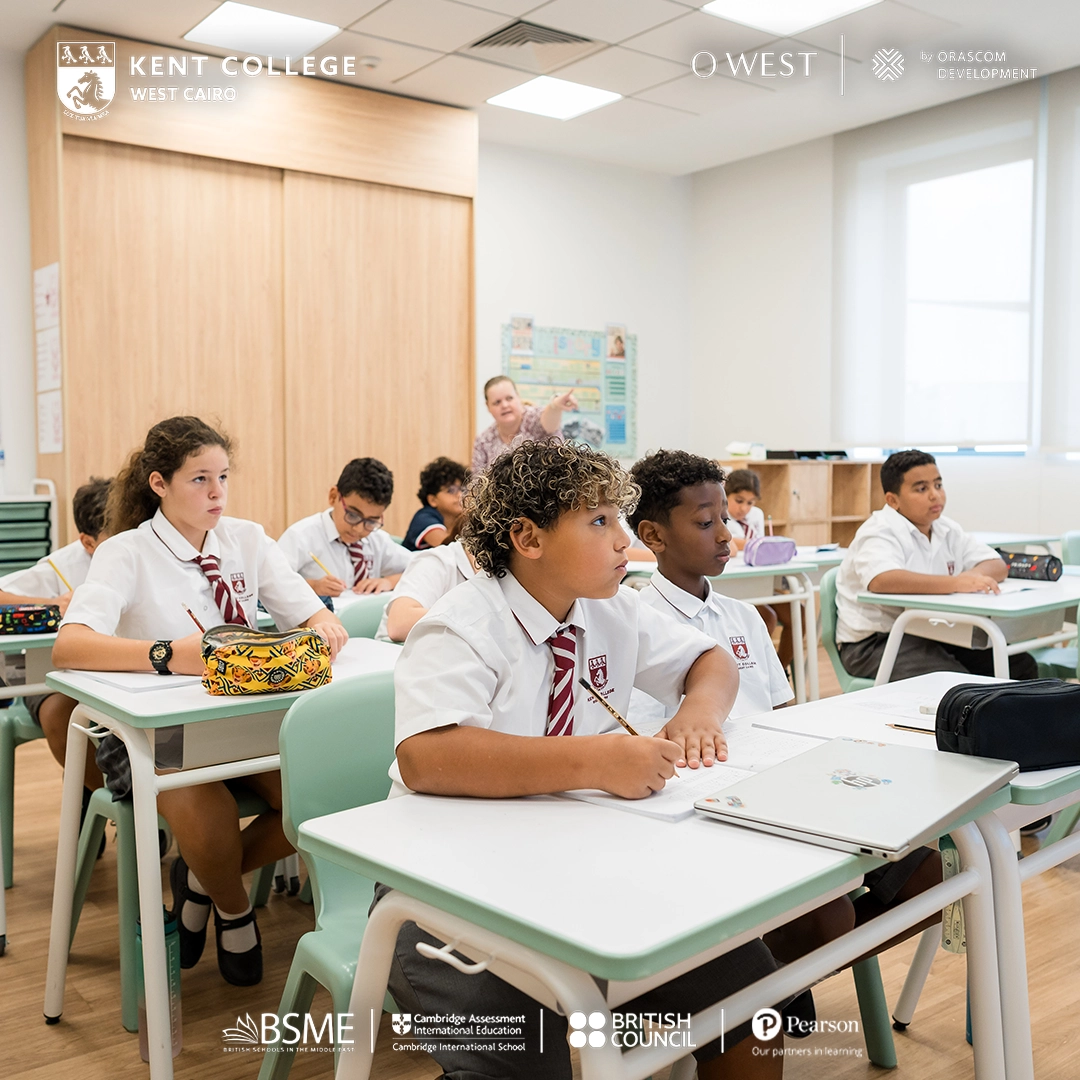
The first five years of school are frequently mild. Reading corners, art exhibits, early friendships, grammar courses, and sporting events with happy parents grabbing cameras are all present. One could easily consider these years to be an introduction to the “real” academic pressure that follows.
In reality, almost everything that comes after is quietly shaped by those first five years.
Patterns start to emerge by the time an individual finishes primary school. Their attitude toward education. Their self-assurance in raising their voices. Their readiness to make an attempt, fail, and try again. their capacity for self-reliance. These foundations are gradually laid starting in Reception and do not emerge all at once in Year 10.
It is crucial for families seeking the best British school to comprehend the long-term effects of early education. Because no single set of exam scores may have as much of an impact on the following ten years as what takes place in those early classes.
Confidence Is Built Early Or Not at All
It’s astonishing how early children develop self-perceptions.
Many people have an internal narrative by the time they are seven or eight years old: “I’m good at maths.”
“I’m not creative.”
“I’m a shy person.”
“I’m smart.”
“I’m not very smart.”
They frequently carry these labels into secondary school.
Children are encouraged to view ability as something that develops in a supportive setting, especially in a reputable British school in Sheikh Zayed. Errors are presented as an essential part of learning rather than a cause for alarm. This kind of thinking is especially important during the more difficult teenage years.
Resilience is more important than intelligence when it comes to GCSEs, A Levels, and university applications. A young person is much more likely to stick around if they are taught from the beginning that effort results in improvement.
The first five years are when that belief system starts.
Curiosity Drives Long-Term Achievement
Curiosity is the best indicator of future academic success, not memorisation.
In Year 12, students who raise questions in Year 2 are frequently the same ones who delve thoroughly into difficult concepts. Students learn to think rather than just remember when early education encourages curiosity rather than hinders it.
This is where steam education comes in handy.
Kent College encourage children to investigate links across courses by incorporating science, technology, engineering, the arts, and mathematics from an early age. Creative writing can result from a straightforward classroom experiment. Mathematical reasoning can be introduced in a design project. Coding exercises can foster both inventiveness and logical reasoning.
Steam education is ingrained in the curriculum of the best British schools and is not viewed as an ongoing trend. Introduced in the early years, it teaches kids that subjects are tools for comprehending the world rather than closed divisions.
This viewpoint continues into secondary education, where critical thinking becomes more crucial.
Independence Begins Sooner Than You Think
Reading ability, spelling examinations, and multiplication tables are among the academic milestones that parents frequently focus on. However, independence indicates future success just as well.
- Is your child able to arrange their belongings?
- Are they able to responsibly handle homework?
- Do they talk confidently to teachers?
- Are they able to handle small friendship problems independently?
These minor abilities, developed throughout the first five years of life, serve as the cornerstone for future self-management. Students must be able to study alone by the time they are in sixth form. Self-direction is expected at universities. Initiative is valued by employers.
In Sheikh Zayed, a well-run British school progressively fosters independence. Age-appropriate methods are used to assign responsibilities to students. They gain the ability to communicate concepts, work together on tasks, and evaluate their own development.
It takes time to accomplish. When a child learns to take responsibility for their work, it starts in Year 1.
Early Literacy Shapes Every Subject
Reading is the foundation for all subjects, not just English. Strong literacy development over the first five years of school makes it simpler for kids to understand difficult ideas later on. Early verbal confidence is essential for higher learning, whether one is studying historical sources, comprehending scientific data, or writing compelling essays.
Literacy is given top priority across the curriculum in the best British educational settings. Students are guided to read widely, exposed to a wide variety of words, and encouraged to express their ideas.
Strong literacy foundations transform secondary education from a battle to keep up to an increase in understanding.
Social Skills Predict Academic Stability
Academic achievement and emotional health are closely related.
Children gain the following skills during the first five years of life:
- Establish friendships• Handle disagreements
- Properly communicate your emotions
- Collaborate in groups
- Be empathetic
Despite their obvious separation from grades, these abilities have a big impact on performance over the long run.
A child is more likely to engage in lessons if they feel safe in social settings. Group projects will benefit greatly from a student’s ability to work well with others. Exam pressure is easier for those who know how to control their emotions.
Character education starts early, according to schools that place a high priority on counselling in addition to academics, especially a successful British school. It isn’t an accessory. It is essential.
Exposure to steam education Encourages Future Readiness
The topic of educating kids for “jobs that don’t yet exist” comes up frequently. The age of sixteen is not the beginning of that preparation.
Children start experimenting with problem-solving, design thinking, and invention when steam education is introduced in the early years. They construct models. They write basic computer programs. They look into things. They blend engineering and art. They discover that rationality and creativity go hand in hand.
By the time these students start secondary school, they no longer hesitate to take on difficult tasks.
As students become older, steam education becomes more in-depth in the finest British educational environments. Advanced analytical thinking develops from an early curiosity. Structured research emerges from practical experimentation. What started off as light-hearted experimentation turns into true skill. And those initial five years are the root of it all.
The Power of Environment
Long-term results are also influenced by a school’s physical and cultural surroundings.
Are students encouraged to participate in class?
Are educators approachable and helpful?
Does effort receive the same recognition as success?
Are students encouraged to express themselves?
During unexpected transitions between primary and secondary education, that sense of belonging fosters stability. Children are more likely to take chances at school when they feel safe in their surroundings. They offer their responses. They experiment with different topics. They assume positions of leadership. These little displays of self-assurance add up to significant personal development over time.
Academic Rigour Without Pressure
Children should be challenged during their first five years, but not overwhelmed.
A well-balanced British curriculum maintains the enjoyment of studying while introducing structure. Students receive the proper amount of stretching, but they are also assisted when necessary. Instead of defining identity, assessment directs progress.
Kent College is aware that sustainability is necessary for long-term success. Early burnout rarely keeps a child moving on into adolescence. On the other hand, people who link education to development and support are more likely to succeed in the future.
In secondary school, strong foundations lessen the need for extreme intervention. Teachers can build on their existing abilities rather than filling in deficiencies.
What Parents Should Look For
Early school choice is more important than most people realise if the first five years predict the next ten.
Parents thinking about attending a British school in Sheikh Zayed might want to enquire:
- How does the curriculum incorporate steam education?
- How does the school foster resilience and self-assurance?
- Which systems facilitate pastoral care?
- In what ways are self-reliance and accountability promoted?
- How does the school achieve a balance between wellbeing and academic standards?
These questions’ responses frequently indicate whether a school is building the groundwork for long-term success.
Looking Ahead
Secondary school is frequently seen as the most important phase of a child’s education. GCSEs, A Levels, and university paths are important benchmarks.
However, the foundation for those accomplishments is established far earlier.
By the time they are seventeen, a child who can read fluently at age seven might be able to analyse difficult literature. The student who uses steam education to construct basic mechanical models in Year 3 may go on to study engineering. A student who builds resilience in elementary school may handle the pressure of a test with composure and resolve.
Leave a Reply